White paper
Research, design thesis, benchmark synthesis and proposed operating rules.
Start with official municipalities, then build bairro-level records only from sources, stewards and future verified pilots.
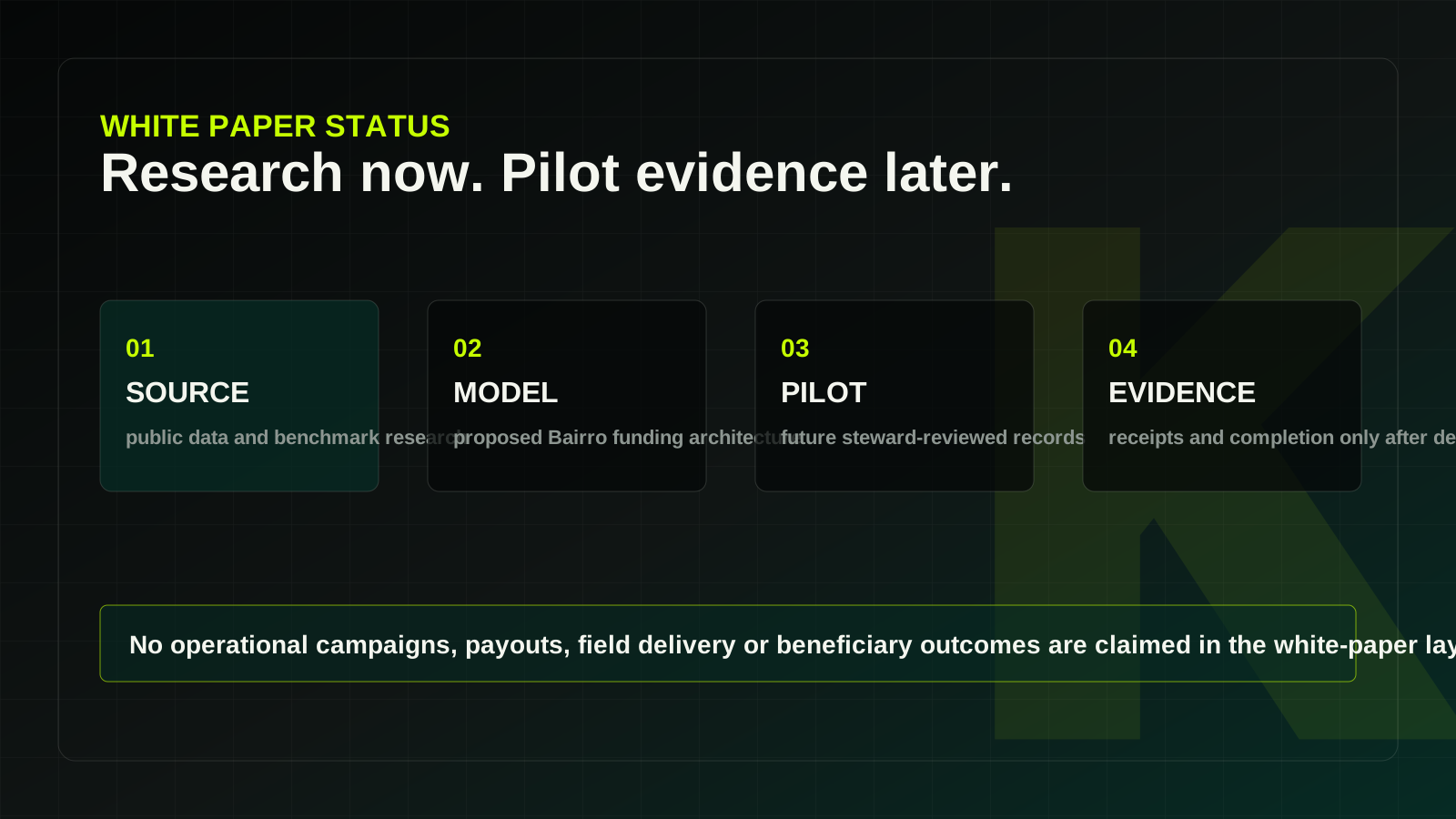
This page is part of the Kimbo Fund white-paper layer: source-backed research, category design, proposed evidence standards and pilot templates. No campaign is presented as active; no money movement, field delivery, receipt upload, or beneficiary outcome is asserted.
Research, design thesis, benchmark synthesis and proposed operating rules.
No operational campaign, payout, receipt upload, field delivery or completed intervention is asserted on this page.
Any future project must publish source scope, steward review, budget basis, milestone rule, receipt trail and privacy boundary.
Readers should treat this page as research infrastructure for a proposed Bairro funding system.
The white paper should name Luanda's geography with discipline. The 2024 census gives the official municipal spine and total bairro/aldeia count; historic studies name specific Musseque contexts, but those claims must remain dated and source-scoped.
Luanda population, 2024 census
Luanda is large enough to need a municipality-by-municipality evidence spine. INE Angola 2024 Census, Luanda Definitive Results
Luanda bairros/aldeias counted by the census
The public provincial report supports municipality and aggregate bairro counts, not a full verified bairro-by-bairro needs table. INE Angola 2024 Census, Luanda Definitive Results
Luanda population density
Density makes water, sanitation, electricity and school logistics operationally urgent. INE Angola 2024 Census, Luanda Definitive Results
Luanda households with appropriate drinking-water source
A household-level constraint that should shape proposed water-container, standpost and delivery-record recipes. INE Angola 2024 Census, Luanda Definitive Results
Luanda households using public electricity
Access is not the same as reliable power; outages and local safety still matter. INE Angola 2024 Census, Luanda Definitive Results
Luanda residents age 5-18 outside school
School-kit and learning pilot templates must be itemized and child-safe. INE Angola 2024 Census, Luanda Definitive Results
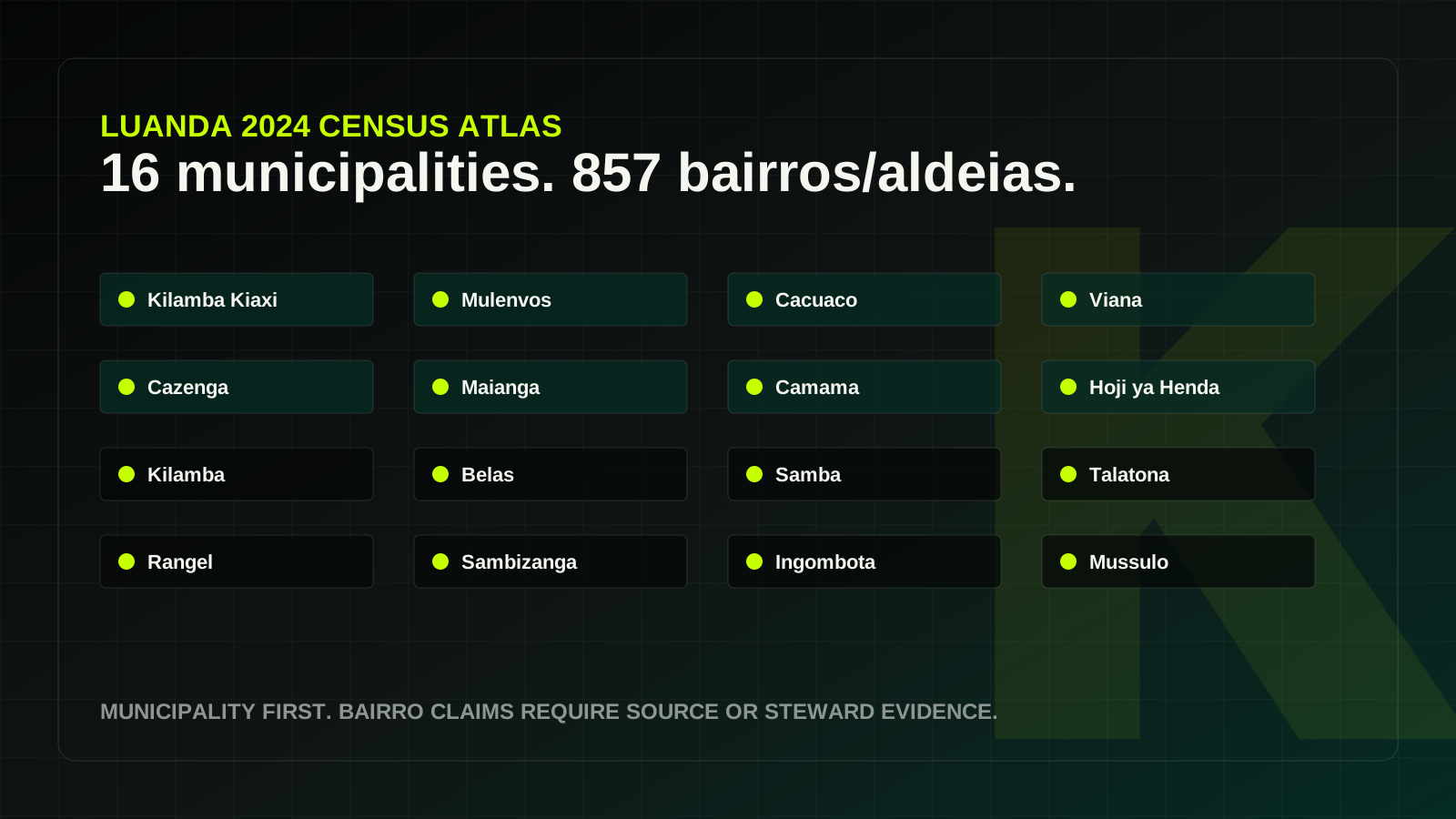
The white paper should name Luanda's geography with discipline. The 2024 census gives the official municipal spine and total bairro/aldeia count; historic studies name specific Musseque contexts, but those claims must remain dated and source-scoped.
These pages make the site denser without turning the brand into unsupported execution claims.
Luanda now has 16 municipalities in the official structure. That is the safest starting grid for source-backed pages and future pilot triage.
INE reports 857 bairros/aldeias for Luanda, but the public provincial report does not provide a verified public needs table for every bairro. Kimbo should build that table only as future sources, stewards and pilots support it.
Use Musseque where the source uses it or where local verification supports it. Do not collapse every low-income area, every municipality or every bairro into the same label.
A serious register should show place name, municipality, source, year, evidence type, needs category, confidence level and privacy boundary.
The 2024 census gives the first safe operating map. Kimbo should add bairro-level records only when a source, steward or campaign record supports the claim.
Largest municipality by population; high-priority for future school, water and youth-service intake design.
Large peripheral population; needs source-safe bairro mapping before claims are made.
Major northern municipality with historic settlement and service-gap evidence in the literature.
Large growth corridor; relevant for transport, water, market tools and youth campaigns.
Dense urban municipality; relevant for service pressure, health logistics and school-support templates.
Central municipality; needs neighborhood-level proof rather than broad city generalization.
Large municipality where pilot categories must distinguish household, school and public-space needs.
Major municipality in the new Luanda structure; use census language until deeper bairro records are sourced.
Planned-urban context; do not treat all Luanda municipalities as informal-settlement equivalents.
Lower density in provincial table; relevant for edge-service and transport campaigns.
Coastal and urban service context; requires location-safe intake records.
Mixed high-income and service-gap geography; avoid simplistic poverty labels.
Very high density reported by INE; relevant for WASH and public-space needs.
Highest density in the INE provincial report; historic Musseque evidence must be dated and sourced.
Administrative center; useful for contact and institutional geography, not a poverty shortcut.
Smallest municipality by population; coastal/island service logic differs from dense inland bairros.
Each claim should remain attached to source, date, geography and confidence level.
The new research layer is intentionally dense: national evidence, Luanda geography, service dashboards and category-specific solution templates.