White paper
Research, design thesis, benchmark synthesis and proposed operating rules.
Child nutrition, school cost and food insecurity evidence translated into dignity-first pilot templates.
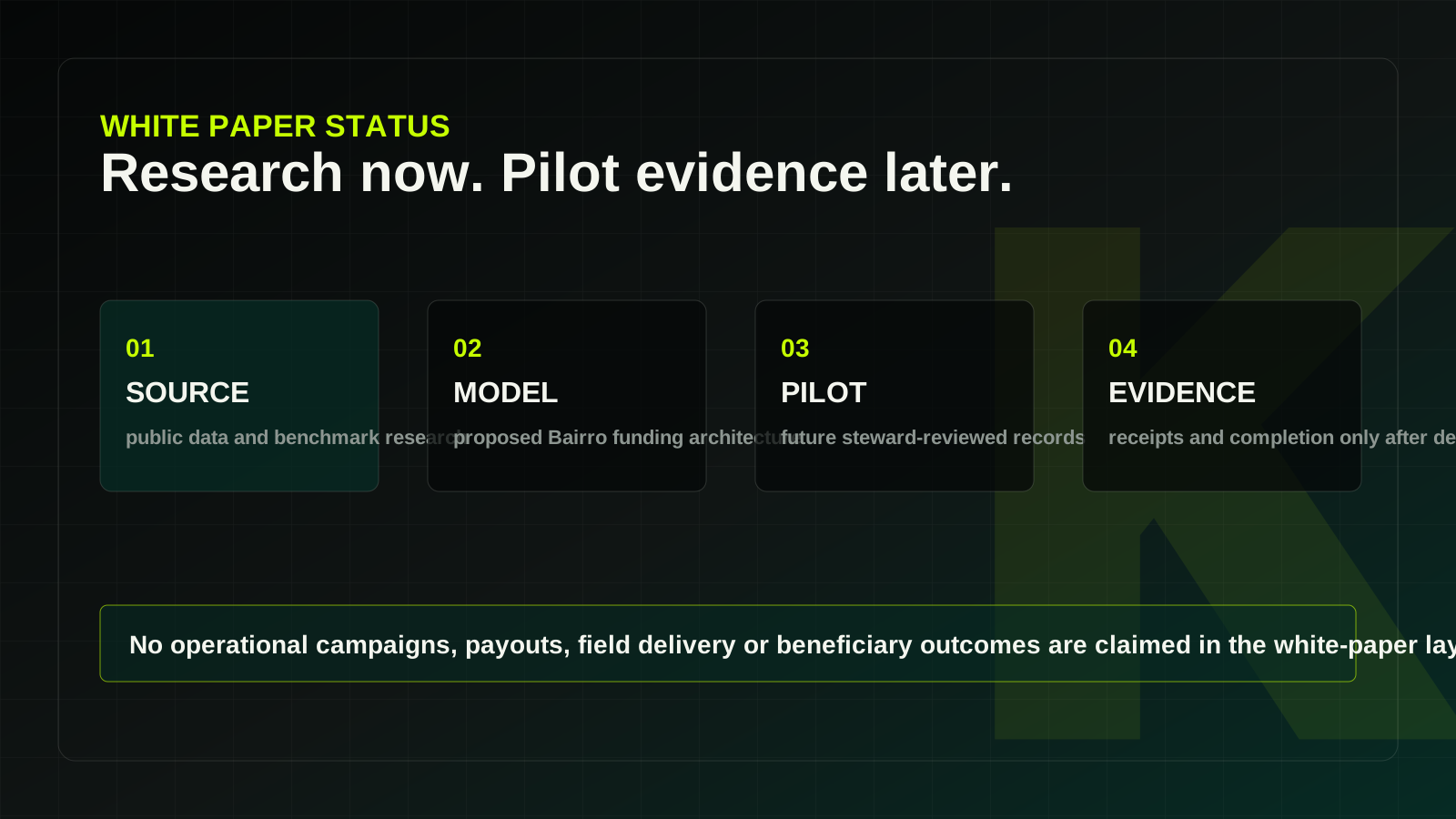
This page is part of the Kimbo Fund white-paper layer: source-backed research, category design, proposed evidence standards and pilot templates. No campaign is presented as active; no money movement, field delivery, receipt upload, or beneficiary outcome is asserted.
Research, design thesis, benchmark synthesis and proposed operating rules.
No operational campaign, payout, receipt upload, field delivery or completed intervention is asserted on this page.
Any future project must publish source scope, steward review, budget basis, milestone rule, receipt trail and privacy boundary.
Readers should treat this page as research infrastructure for a proposed Bairro funding system.
School kits, clinic transport, nutrition support, water containers and hygiene goods are not soft white-paper categories. They sit inside a national child-development emergency documented by official surveys and humanitarian data.
Under-5 stunting
A child-development emergency that links food, water, sanitation, health access and household poverty. INE Angola IIMS 2023-2024 Final Report
Child anemia
Nutrition and health pilot templates need careful privacy boundaries and verifiable supplier evidence. INE Angola IIMS 2023-2024 Final Report
People food insecure due to drought
Use food-insecurity language when sources support it; do not invent famine language without a famine classification. World Food Programme Angola Country Profile
People requiring nutrition support
The proposed need categories can be concrete: vouchers, nutrition support, school meals, water and health logistics. World Food Programme Angola Country Profile
Luanda residents age 5-18 outside school
School-kit and learning pilot templates must be itemized and child-safe. INE Angola 2024 Census, Luanda Definitive Results
Projected international poverty rate in 2025
World Bank projection using the 2018 IDREA distribution and pass-through assumptions. World Bank Macro Poverty Outlook, Angola, April 2026
School kits, clinic transport, nutrition support, water containers and hygiene goods are not soft white-paper categories. They sit inside a national child-development emergency documented by official surveys and humanitarian data.
These pages make the site denser without turning the brand into unsupported execution claims.
Stunting reflects food, disease, water, sanitation, caregiving and health-service access over time. A credible pilot design should connect nutrition support to receipts, vouchers, supplier evidence and privacy-safe completion notes.
WFP and FAO document food insecurity and drought pressure. Kimbo should use those terms unless an authoritative classification says famine. Precision protects credibility.
Uniforms, books, transport, food, materials and forgone household income can push children out of school. Small verified pilot templates can target these frictions directly.
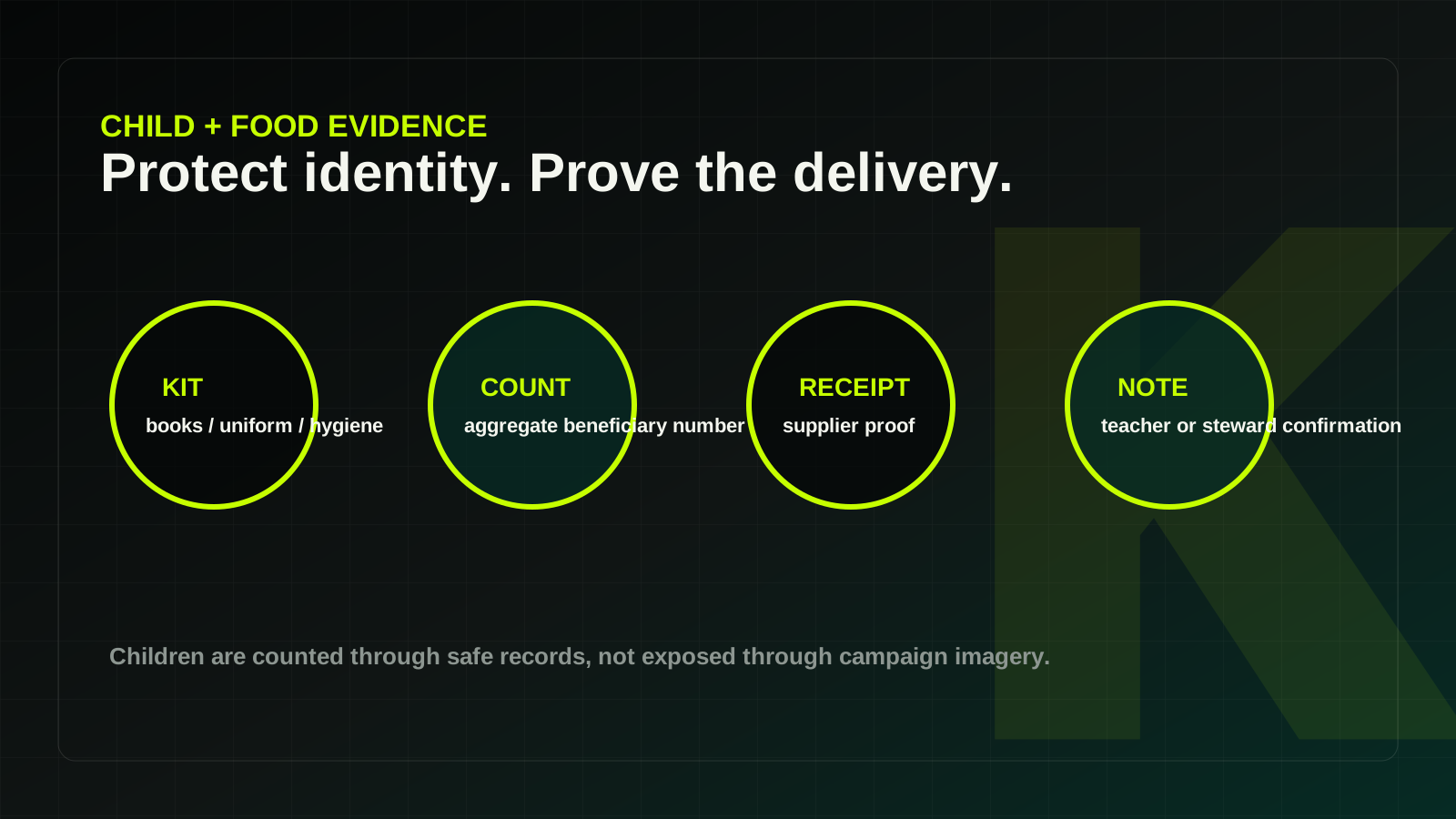
Use aggregate beneficiary counts, item photos, supplier receipts, delivery notes and steward confirmation. Do not make a child's face the evidence object.
Each claim should remain attached to source, date, geography and confidence level.
The new research layer is intentionally dense: national evidence, Luanda geography, service dashboards and category-specific solution templates.