White paper
Research, design thesis, benchmark synthesis and proposed operating rules.
A dense evidence page connecting Angola's macro economy to proposed Bairro and Musseque funding records.
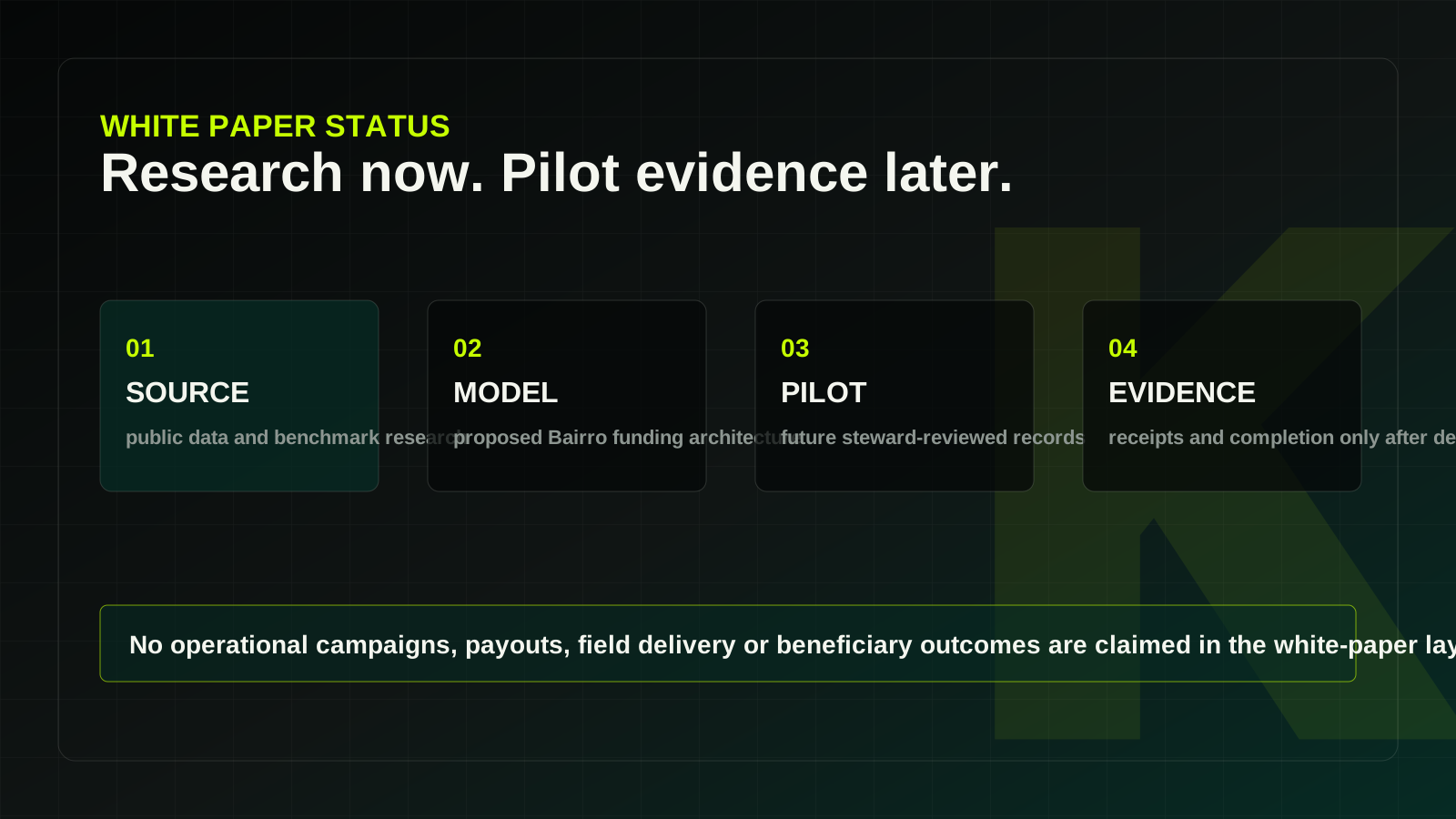
This page is part of the Kimbo Fund white-paper layer: source-backed research, category design, proposed evidence standards and pilot templates. No campaign is presented as active; no money movement, field delivery, receipt upload, or beneficiary outcome is asserted.
Research, design thesis, benchmark synthesis and proposed operating rules.
No operational campaign, payout, receipt upload, field delivery or completed intervention is asserted on this page.
Any future project must publish source scope, steward review, budget basis, milestone rule, receipt trail and privacy boundary.
Readers should treat this page as research infrastructure for a proposed Bairro funding system.
Angola's macro story has oil, growth, reserves and public budgets. The Bairro story has unemployment, informal work, high child deprivation and service gaps that show up before formal systems respond.
Oil share of GDP, fiscal revenue and exports
The national economy remains exposed to oil-price and oil-production shocks while everyday service gaps stay local. World Bank Macro Poverty Outlook, Angola, April 2026
Projected international poverty rate in 2025
World Bank projection using the 2018 IDREA distribution and pass-through assumptions. World Bank Macro Poverty Outlook, Angola, April 2026
Unemployment, Q3 2025
The labor market constraint is not abstract; it affects household capacity to handle shocks. INE Angola Employment Survey, Q3 2025
Youth unemployment, Q3 2025
A youth-heavy country is a strong case for pilot templates around learning, sport, tools and local opportunity. INE Angola Employment Survey, Q3 2025
Informal employment, Q3 2025
Formal documents often arrive after real need; steward-backed proof must bridge that gap. INE Angola Employment Survey, Q3 2025
Open Budget Survey transparency score
A low transparency score strengthens the case for readable local campaign records and source trails. International Budget Partnership Open Budget Survey Angola 2023
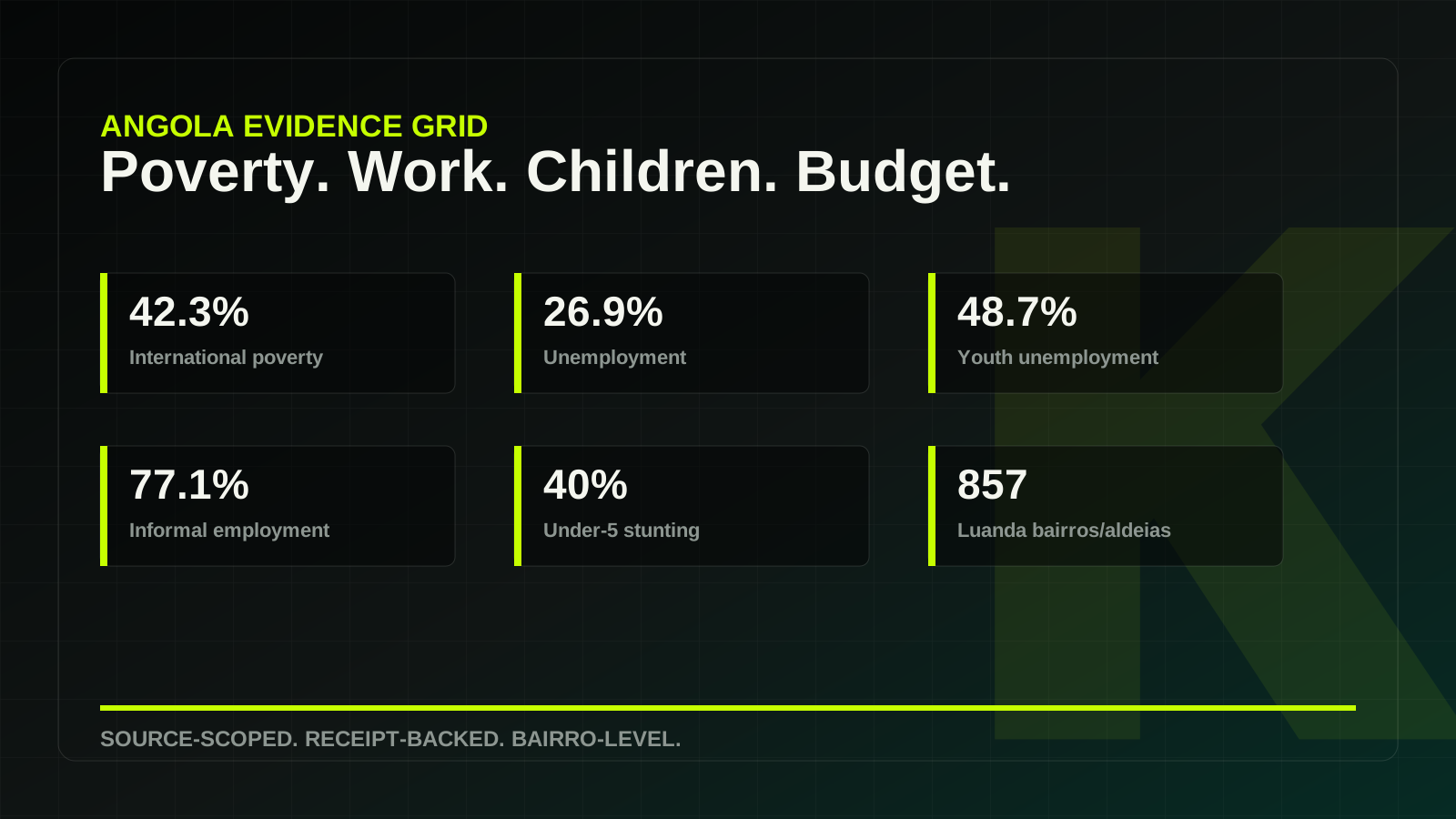
Angola's macro story has oil, growth, reserves and public budgets. The Bairro story has unemployment, informal work, high child deprivation and service gaps that show up before formal systems respond.
These pages make the site denser without turning the brand into unsupported execution claims.
The World Bank frames Angola as a country with major natural-resource potential while remaining dependent on oil for fiscal revenue and exports. That creates a national scale story, but household stress still requires local delivery records.
High unemployment, very high youth unemployment and dominant informal work mean that many families absorb school, water, clinic and food shocks without a stable formal buffer.
The proposed model should publish small records that can be checked in a pilot: who verified the need, what object is proposed, what the unit cost is, what receipt would remain and what completion evidence is safe.
Macro indicators should never be turned into fake bairro-level precision. Pages must label whether a claim is national, Luanda-wide, municipal, study-based or pilot-level.
Each claim should remain attached to source, date, geography and confidence level.
The new research layer is intentionally dense: national evidence, Luanda geography, service dashboards and category-specific solution templates.